The $3 Spin Cycle
It’s 7:42am on the corner of Jane Street and 8th ave and Jane Laundromat is doing what it always does: quietly keeping the neighborhood functional.
There’s usually a line, but it’s never more than two people deep. Behind the counter, the attendant runs the whole operation. His right hand is putting your bag on the scale weighing your clothes, his eyes are on the computer pulling up your profile, his left hand is hitting a few keys, and the machine is printing your receipt – all in about ten seconds.
If you’re picking up, it’s even cleaner: name, nod, and someone disappears into the back and returns with your professionally washed, folded, compressed clothes in the same bag that you dropped it off in.
But the real action is in the back.
Behind the counter, a small team moves through the work with practiced speed: tagging bags, sorting piles, feeding machines, folding stacks into clean, sharp rectangles. It’s not performative. It’s not artisanal. It’s operations.
And in a city that loves to charge you for convenience, that makes this place feel less like a business and more like infrastructure.
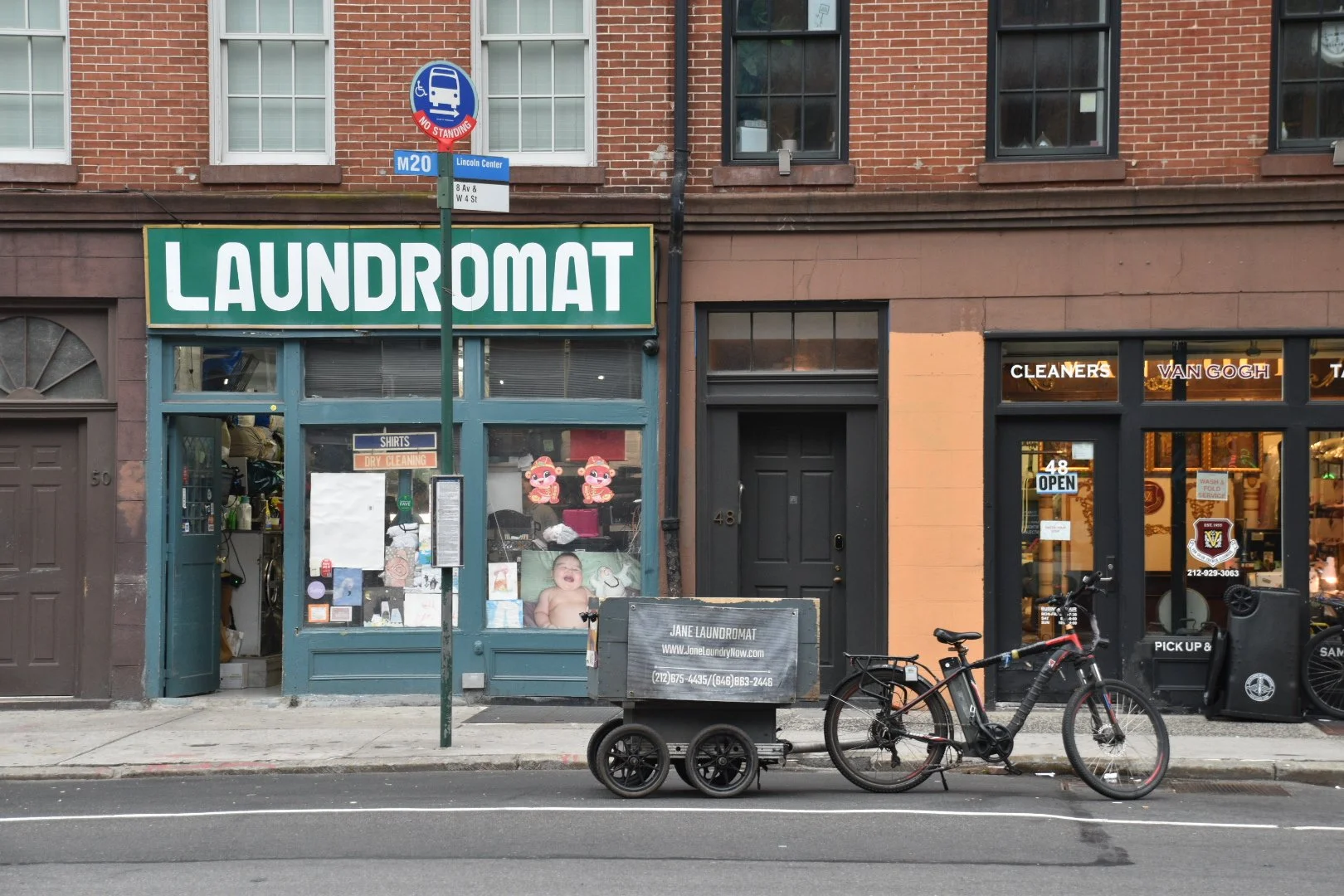
(Jane Laundromat, West Village)
The luxury tax, disguised as an amenity
Apartment listings in New York love a few phrases the way bodegas love “ATM inside” signs. “Sun-drenched.” “Cozy.” And the one that changes your weekly logistics: washer/dryer in unit.
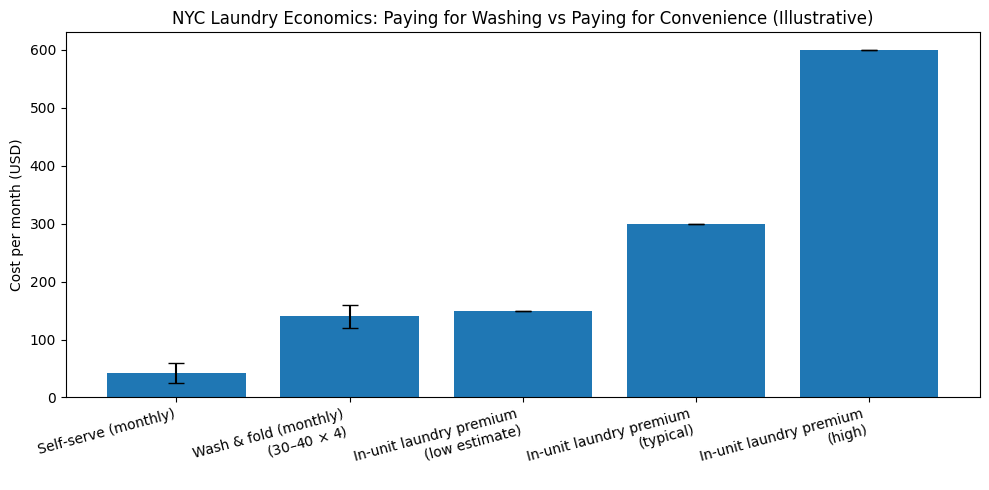
It’s a lifestyle upgrade, but it’s also a premium. Often hundreds of dollars more per month in rent for the privilege of never leaving your building with a laundry bag.
Jane Laundromat is the counterpoint: fluorescent lights, stainless steel, zero romance, full utility.
Which raises the question: if this is the “cheap” option, why does it work so well?
My numbers
My bag is usually 15-20 pounds and costs $30-$40 at Jane.
That’s roughly $1.50-$2.00 per pound, right in the sweet spot where wash-and-fold starts to make sense for anyone whose time is expensive and whose apartment is small.
And that’s the key: wash-and-fold is the real product. Self-serve machines exist (and are much cheaper), but the convenience is the service.
You’re not paying for soap and water. You’re paying for:
not doing it yourself
not waiting around
not folding
not thinking about it at all
It’s a transaction that buys back a few hours of your week.
The business is trust
What I notice most isn’t the machinery. It’s the consistency.
They remember names. They recognize bags. They treat clothing like it belongs to someone (because it does). Turnaround is fast (often under 24 hours), and the whole process feels oddly reliable for New York, where reliability is typically sold separately.
There are other laundromats within walking distance. Switching costs are low. But trust is sticky. Once you believe a place won’t shrink your sweaters, lose your socks, or fold your life into chaos, you stop shopping around.
Why I keep thinking about this
After writing about a $4.50 breakfast sandwich, a pattern is starting to emerge.
New York runs on small systems that absorb friction.
The bodega absorbs hunger and time pressure.
The laundromat absorbs space constraints and rent math.
This is what happens when a city makes square footage scarce: people build shared infrastructure to compensate. Laundromats aren’t a relic, they’re a rational response to the economics of living here.
And every morning, under fluorescent lights, the neighborhood keeps moving because someone in the back is folding. Next time you pass your neighborhood laundromat, step inside for ten seconds. Notice who’s waiting. Notice who’s working. There’s a whole microeconomy hiding behind that glass door.